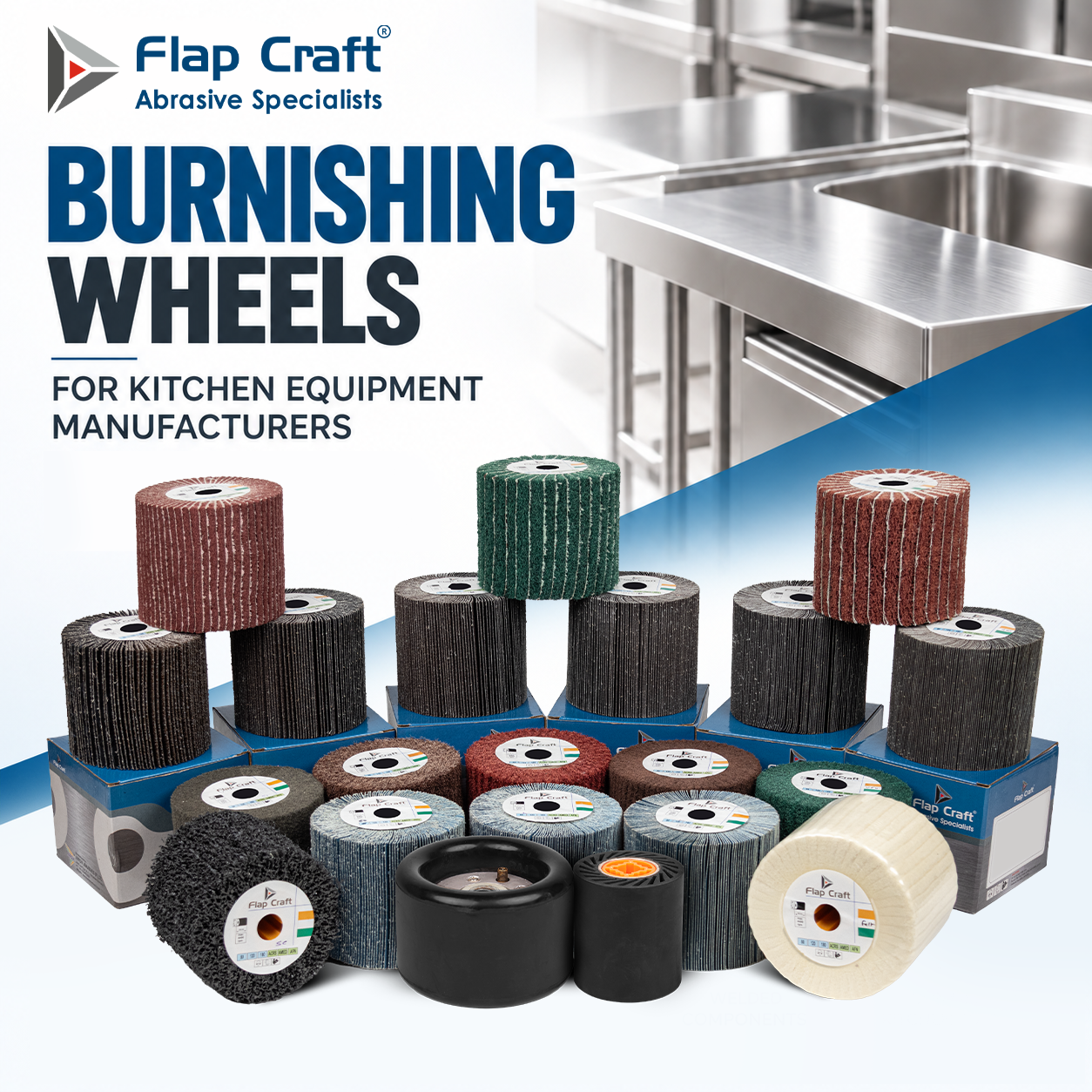
Burnishing Wheels for Kitchen Equipment Manufacturers
Stainless steel is widely used in commercial kitchen equipment, including sinks, worktables, storage cabinets, countertops and cooking appliances. However, achieving a consistent, professional finish requires the right surface-finishing process.
Burnishing wheels help refine prepared stainless steel surfaces, blend finishing marks and achieve uniform brushed or satin finishes, depending on the wheel construction and application.
For kitchen equipment manufacturers, selecting the right burnishing wheel can improve surface consistency and support efficient production.
Applications of Burnishing Wheels in Kitchen Equipment
Burnishing wheels can be used in several stainless steel finishing applications:
- Kitchen sinks and worktops: Help refine surfaces and maintain a consistent brushed appearance.
- Storage cabinets and panels: Support uniform finishing across visible stainless steel surfaces.
- Cooking equipment: Help achieve a clean, consistent finish on suitable appliance housings.
- Welded components: Blend prepared weld areas with surrounding surfaces after appropriate grinding.
- Commercial kitchen furniture: Support finishing operations on stainless steel counters, shelves and frames.
The final result depends on the material, initial surface condition, wheel specification and machine settings.
How to Choose the Right Burnishing Wheel
Choosing the correct wheel depends on the required finish, abrasive construction and machine compatibility.
1. Select the Right Grit
Flap Craft burnishing wheels are available in grit options including 36, 60, 80, 120, 180, 220 and 400.
Coarser grits are generally used for earlier abrasive stages, while finer grits are often selected for surface refinement. The ideal grit depends on the starting surface and desired finish, so testing on a sample component is recommended.
2. Consider Wheel Construction
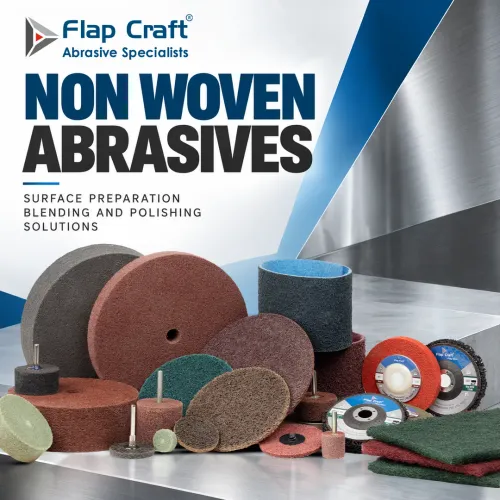
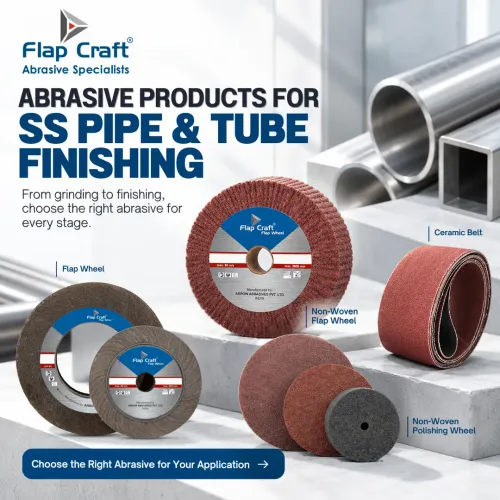
Abrasive cloth wheels and non-woven abrasive wheels offer different finishing characteristics. Cloth-based wheels can provide more direct abrasive action, while non-woven wheels are commonly used for surface conditioning and controlled finishing.
The appropriate construction depends on the application and required surface texture.
3. Check Machine Compatibility
Before selecting a burnishing wheel, verify its diameter, width, bore or mounting arrangement, and permitted operating speed against the machine manufacturer's specifications.
Tips for Consistent Stainless Steel Finishing
Kitchen equipment manufacturers can improve finishing consistency by following a controlled process:
- Prepare the surface before using finer finishing abrasives.
- Follow a suitable grit progression.
- Maintain consistent machine movement and pressure.
- Keep the finishing direction uniform for brushed surfaces.
- Test the wheel on a sample before production.
- Inspect wheels and mounting components regularly.
These practices help reduce unwanted scratches and visible variations across stainless steel panels.
Choose Burnishing Wheels for Your Application
The right burnishing wheel can help kitchen equipment manufacturers achieve consistent surface finishes across sinks, worktops, cabinets and other stainless steel components.
Flap Craft offers burnishing wheel options in multiple grits for industrial metal-finishing applications. Selecting the appropriate wheel requires consideration of the workpiece, desired finish, wheel specifications and machine compatibility.
Contact Flap Craft to discuss your stainless steel finishing requirements and find a suitable wheel for your production process.
Frequently Asked Questions
Which burnishing wheel grit is suitable for stainless steel?
The appropriate grit depends on the existing surface and required finish. Coarser grits are generally used in earlier stages, while finer grits support surface refinement.
Can burnishing wheels remove weld marks?
They may help blend prepared weld areas. Heavy weld reinforcement and deep marks generally require preliminary grinding.
Are burnishing wheels suitable for stainless steel kitchen sinks and worktops?
Yes, selected wheels can be used for these applications when compatible with the workpiece, machine and required finish. Sample testing is recommended.
Keywords