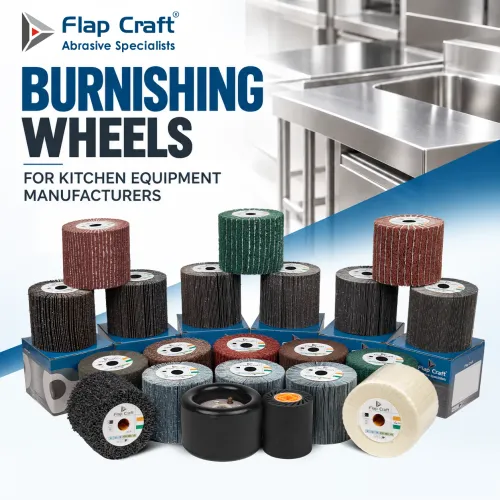
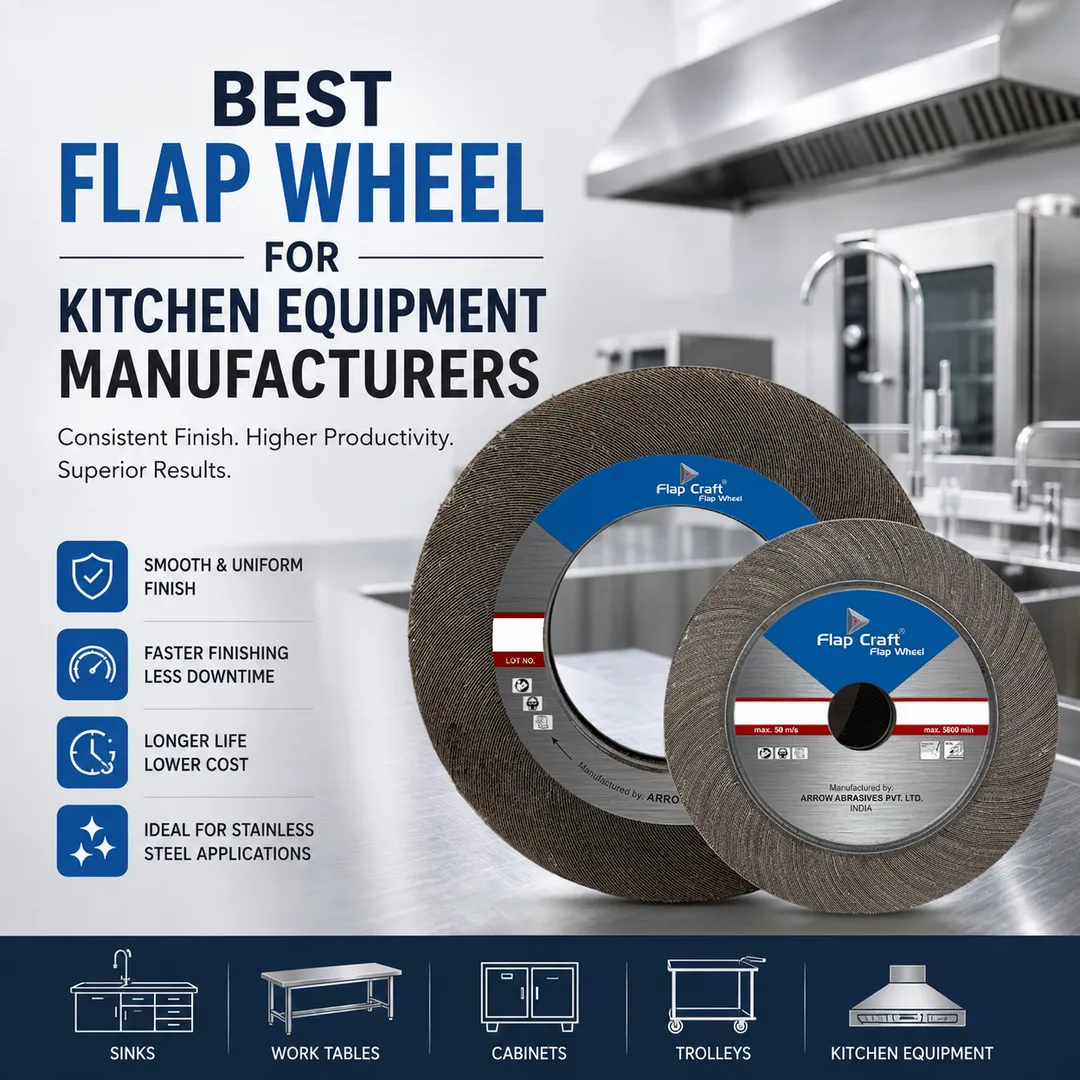
Best Flap Wheel for Kitchen Equipment Manufacturers
If you work with stainless steel kitchen equipment, you probably spend a good amount of time dealing with weld seams, sharp edges, scratches, and uneven finishes. The grinding itself is usually not the difficult part. Getting the same clean finish across every piece is where things get challenging.
This is where the choice of flap wheel makes a real difference.
A flap wheel that cuts too aggressively can leave deep scratches and excess heat. One that is too soft may take longer to remove welds and wear out quickly. The right combination of abrasive type, grit, and wheel quality can make the finishing process faster and much more consistent.
What Makes Stainless Steel Finishing Different?
Kitchen equipment manufacturers commonly work with stainless steel because it is durable, corrosion-resistant, and easy to maintain. But stainless steel also needs to be handled carefully during grinding and finishing.
Too much pressure or the wrong abrasive can generate excessive heat and leave unwanted marks on the surface. Deep scratches can also become difficult to remove during the later polishing stages.
For this reason, the flap wheel should be selected according to both the material and the stage of finishing.
Common Problems During Kitchen Equipment Finishing
A typical stainless steel fabrication job can involve several finishing problems:
- Weld seams that need blending
- Sharp edges after cutting
- Deep grinding marks
- Uneven satin finishes
- Heat discolouration
- Abrasive wheels wearing out too quickly
- Different finishes appearing on the same batch
Most of these problems can be reduced by using the correct grit and a good-quality flap wheel.
Which Grit Should You Use?
There isn't one grit that works for every job.
For example, if you are removing a heavy weld seam, starting with a coarse grit makes sense. Once the weld has been blended, you can move to a finer grit to remove the previous scratches and prepare the surface for polishing.
A simple starting point is:
Weld removal - #40-60
Weld blending - #60-80
General surface finishing - #80-120
Satin finishing - #180-240
Fine finishing / polishing preparation - #320 +
These are general guidelines. The ideal grit can vary depending on the stainless steel grade, weld condition, desired finish, and equipment being used.
What Type of Flap Wheel Should You Choose?
For kitchen equipment, abrasive quality matters just as much as grit.
A good flap wheel should provide controlled cutting without unnecessarily damaging the stainless steel surface. It should also maintain consistent performance as the abrasive wears.
When selecting a flap wheel, look at:
Abrasive material: Choose an abrasive suitable for stainless steel and the type of work being performed.
Grit: Match the grit to the amount of material you need to remove and the final finish you want.
Wheel construction: Well-made flaps should remain securely attached during use and wear evenly.
RPM rating: Always make sure the wheel is suitable for the machine being used.
Consistency: For production work, consistent performance from one wheel to the next is extremely important.
A Simple Example
Let's say you're manufacturing 200 stainless steel commercial kitchen sinks.
After welding, every sink has a visible weld seam that needs to be blended before the final finishing process.
If you use a coarse flap wheel for the entire job, you may remove the weld quickly, but you could also leave deeper scratches that take longer to remove later.
A better approach would be to use a suitable coarse grit for weld removal and then move to a medium or fine grit for blending and surface preparation.
This gives you better control over the finish and can reduce the amount of work required during the polishing stage.
The same principle applies to stainless steel tables, cabinets, trolleys, exhaust hoods, counters, and other fabricated kitchen equipment.
Why FlapCraft Flap Wheels?
For manufacturers who use abrasives every day, consistency matters.
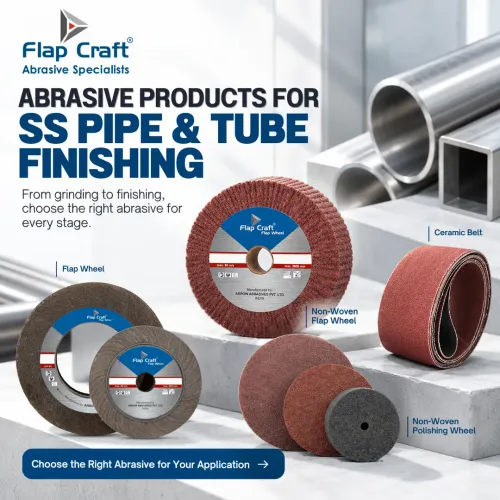
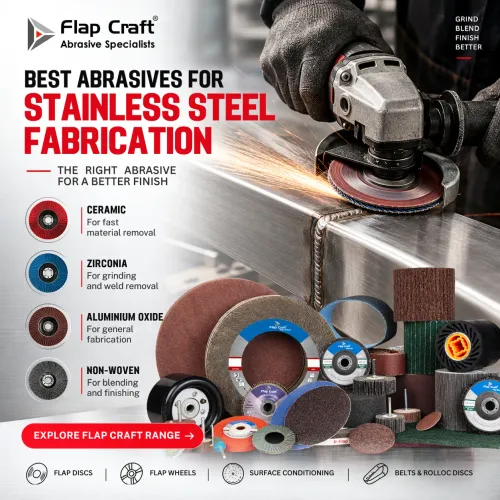
FlapCraft Flap Wheels are designed for industrial grinding and finishing applications where reliable performance and surface quality are important.
They can be used for applications such as:
- Stainless steel kitchen equipment
- Commercial sinks
- Stainless steel tables
- Cabinets and storage equipment
- Trolleys
- Food processing equipment
- Weld blending and edge finishing
FlapCraft offers different grit options and configurations, allowing manufacturers to select a wheel according to their specific application.
If your production involves large quantities of stainless steel components, choosing a reliable flap wheel can help reduce unnecessary wheel changes, improve finishing consistency, and keep production moving.
How to Get Better Results From Your Flap Wheel
Even a good flap wheel will not perform properly if it is used incorrectly.
Here are a few things worth checking:
Don't force the wheel. Excessive pressure can increase heat and wear the abrasive faster.
Use the correct RPM. Always stay within the manufacturer's recommended operating speed.
Use the correct grit sequence. Don't try to achieve the final finish using one coarse grit.
Keep the workpiece clean. Contamination can affect both the abrasive and the surface finish.
Don't wait until the wheel is completely worn. A worn wheel may no longer give you the cutting performance or finish you need.
What Is the Best Flap Wheel for Kitchen Equipment?
The answer depends on the job.
For heavy weld removal, you need a flap wheel that can cut efficiently without excessive pressure. For blending and surface preparation, a medium grit is usually more suitable. For satin finishing, a finer grit is the better choice.
So rather than asking, 'Which flap wheel is the best?', it's more useful to ask:
'Which flap wheel is best for the specific finish I'm trying to achieve?'
Once you know the material, application, grit, machine, and required finish, choosing the right abrasive becomes much easier.
For kitchen equipment manufacturers looking for dependable industrial flap wheels, FlapCraft Flap Wheels are worth considering for stainless steel grinding, weld blending, and finishing applications.
Frequently Asked Questions
Q- Which flap wheel is best for stainless steel?
Ans- A flap wheel designed for stainless steel with the appropriate abrasive material and grit is the right choice. The required grit depends on whether you're removing welds, blending surfaces, or preparing for polishing.
Q- What grit should I use for stainless steel welds?
Ans- For heavier weld removal, 40 or 60 grit can be a good starting point. For blending and refining the surface, 80, 120, or finer grits may be more appropriate.
Q- Can flap wheels be used on SS 304?
Ans- Yes. Flap wheels are commonly used for grinding, deburring, weld blending, and finishing SS 304 components.
Q- How can I prevent deep scratches on stainless steel?
Ans- Use the correct grit sequence and avoid excessive pressure. Starting with an unnecessarily coarse abrasive can create scratches that take longer to remove later.
Q- Why does my flap wheel wear out quickly?
Ans- Excessive pressure, incorrect RPM, unsuitable abrasive selection, and heavy material removal can all reduce wheel life. The quality of the abrasive also makes a difference.
Keywords