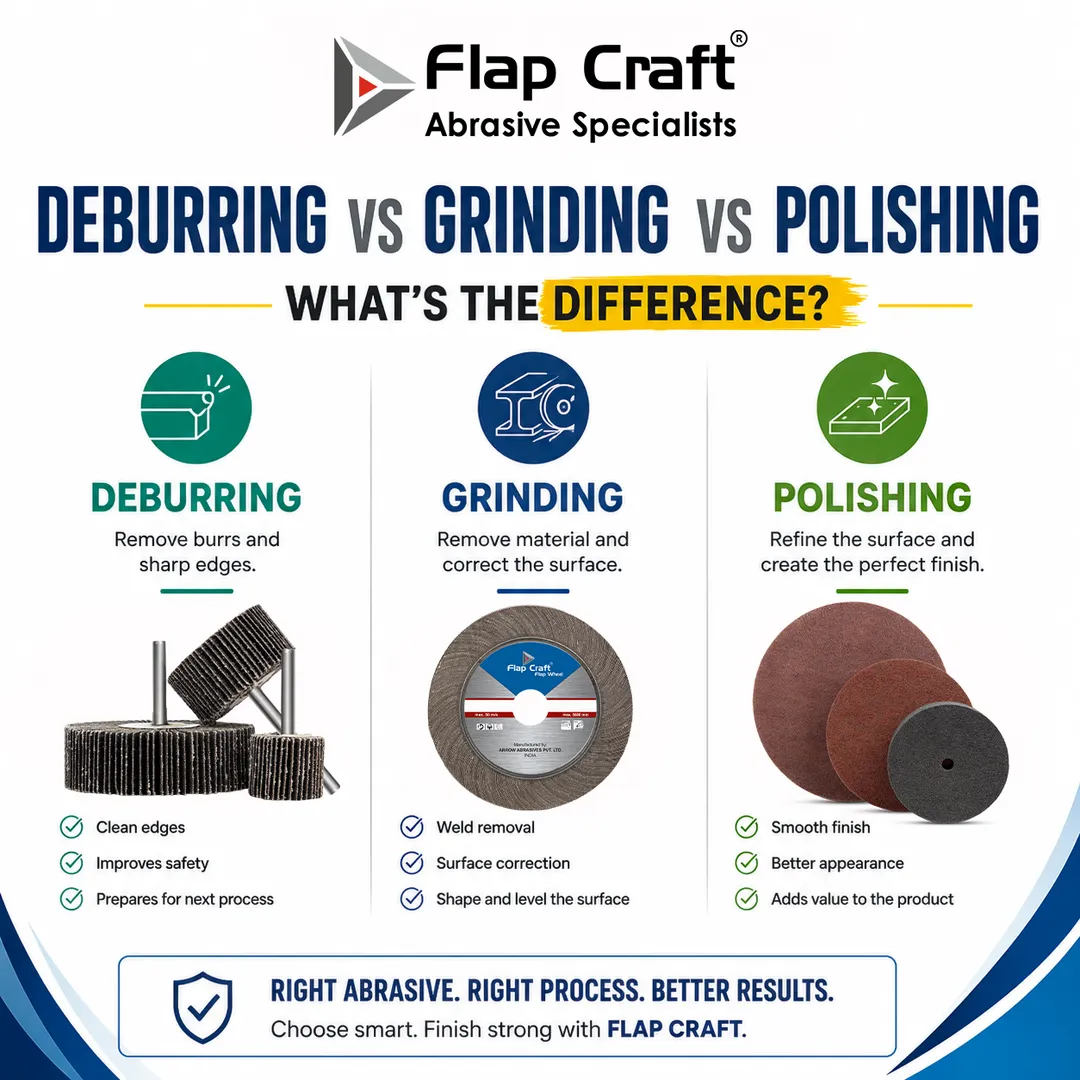
Deburring vs Grinding vs Polishing: What’s the Difference?
If you work with metal, you have probably heard the terms deburring, grinding, and polishing many times. They are all part of metal finishing, but they are used for very different purposes.
Choosing the wrong process can result in unnecessary material removal, poor surface finish, wasted abrasive, and extra finishing work.
So, what exactly is the difference?
The simplest way to understand it is:
Deburring removes unwanted sharp edges. Grinding removes material and corrects the surface. Polishing improves and refines the final surface finish.
Let’s look at each process more closely.
What Is Deburring?
Deburring is the process of removing burrs, sharp edges, and small unwanted projections left behind after cutting, drilling, machining, or fabrication.
The purpose is mainly to clean and smooth the edges without significantly changing the shape of the component.
For example, a laser-cut stainless-steel sheet may have sharp edges after cutting. These edges need to be removed before the component is handled, assembled, or sent for further processing.
Deburring is commonly used for:
- Removing sharp edges
- Removing small burrs
- Preparing components for assembly
- Improving handling safety
- Cleaning up cut edges
Think of deburring as edge preparation.
What Is Grinding?
Grinding is used when you need to remove more material or correct an uneven surface.
It is commonly used for weld removal, excess material, surface correction, edge shaping, and removing deeper imperfections.
For example, after welding two stainless-steel components together, the weld may sit above the surrounding surface. Grinding can remove this excess material and blend the area with the rest of the component.
Grinding is commonly used for:
- Weld removal
- Weld blending
- Material removal
- Surface correction
- Edge shaping
- Removing deeper scratches or imperfections
Flap wheels are often used for these applications because they provide controlled material removal while also helping to prepare the surface for the next finishing stage.
Think of grinding as material removal and surface correction.
What Is Polishing?
Polishing is generally performed when the surface has already been prepared and you want to achieve a smoother, cleaner, or more attractive finish.
Unlike grinding, polishing is not normally intended for heavy material removal.
It is particularly common in applications where appearance and surface consistency are important, such as stainless-steel kitchen equipment, architectural metalwork, furniture, and decorative components.
Depending on the application, the required finish could be:
- Satin
- Brushed
- Smooth
- Bright
- Decorative
Think of polishing as surface refinement.
Deburring vs Grinding vs Polishing: The Key Difference
The difference becomes simple when you look at the problem you are trying to solve.
You have a sharp edge or small burr
Use deburring.
The goal is to remove the unwanted edge without unnecessarily changing the component.
You have a weld, excess material, or uneven surface
Use grinding.
The goal is to remove material and bring the surface into the required shape.
You already have a prepared surface but need a smoother or better-looking finish
Use polishing or surface finishing.
The goal is to refine the surface rather than aggressively remove material.
Q- Are These Processes Used Together?
Ans- Yes, In many manufacturing and fabrication jobs, deburring, grinding, and polishing are not alternatives. They are different steps of the same finishing process.
For example, a stainless-steel kitchen equipment component may go through:
Cutting → Deburring → Grinding → Surface Finishing → Polishing
First, sharp edges are removed.
Next, welds or excess material are ground down.
Finally, the surface is refined to achieve the required appearance.
Not every component requires all of these stages. The process depends on the material, condition of the surface, and final finish required.
Why Does Abrasive Selection Matter?
The process is only one part of the equation. The abrasive you use also makes a major difference.
A coarse abrasive can remove material quickly, making it useful for heavier grinding work.
A finer abrasive is more suitable when the goal is surface refinement.
Using an abrasive that is too aggressive for the job can create unnecessary scratches or remove more material than required. Using one that is too fine can make a simple job take much longer.
When choosing an abrasive, consider:
- Material: Stainless steel, mild steel, aluminium, etc.
- Application: Deburring, grinding, blending, or finishing
- Amount of material to remove
- Required surface finish
- Machine and operating speed
- Shape and accessibility of the component
The right abrasive is the one that matches the job.
Common Applications
Deburring
Common in:
- Sheet metal fabrication
- CNC machining
- Laser-cut components
- Hardware manufacturing
- Automotive components
Grinding
Common in:
- Weld fabrication
- Heavy metal fabrication
- Stainless-steel fabrication
- Structural components
- General engineering
Polishing and Surface Finishing
Common in:
- Kitchen equipment
- Stainless-steel products
- Architectural metalwork
- Furniture
- Decorative metal components
- Visible finished surfaces
Where Do Flap Wheels Fit In?
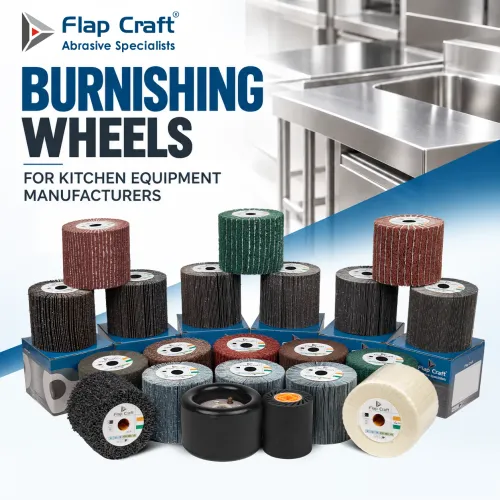
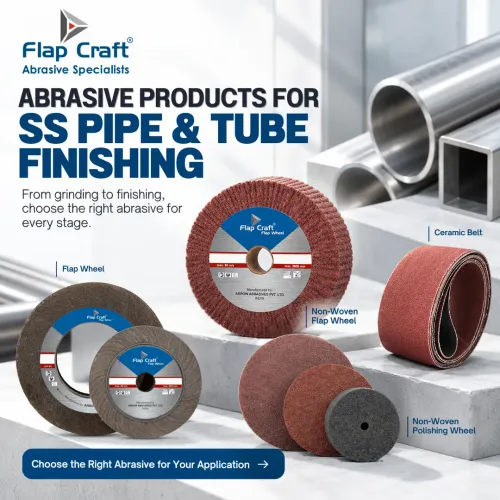
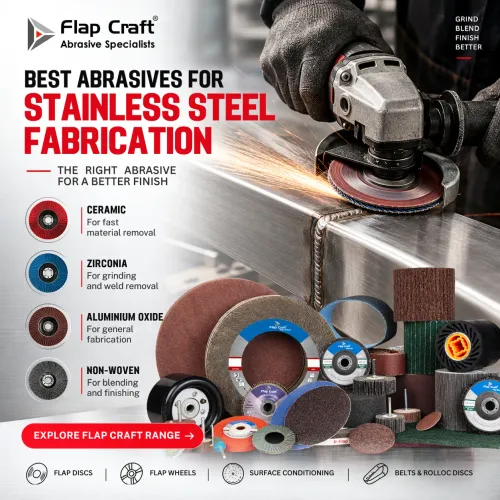
Flap wheels are commonly used in metal fabrication for grinding, blending, deburring, and surface preparation.
They are useful when you need material removal but also want greater control over the finish.
For curved or contoured components, profile flap wheels can provide better access to the surface.
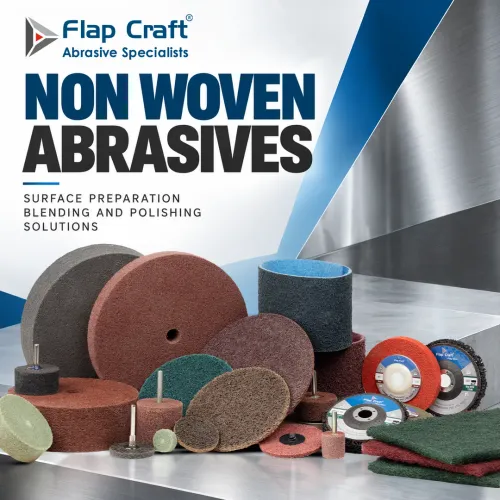
When the focus shifts towards blending, cleaning, and achieving a consistent finish, non-woven abrasives and surface conditioning products can be a better fit.
This is why there is no single abrasive that is best for every application.
The better approach is to select the abrasive based on what you need to achieve on the surface.
How to Choose the Right Process
Before starting a finishing job, ask one simple question:
What am I trying to fix?
If the answer is “a sharp edge or burr”, you need deburring.
If the answer is “excess material, weld, or uneven surface”, you need grinding.
If the answer is “I need a smoother or more uniform final finish”, you need polishing or surface finishing.
This simple distinction can help you avoid using the wrong abrasive and doing unnecessary work.
Mohta Hardware: Abrasive & Surface Finishing Solutions
At Mohta Hardware, we provide a range of abrasive and surface finishing products for different industrial applications.
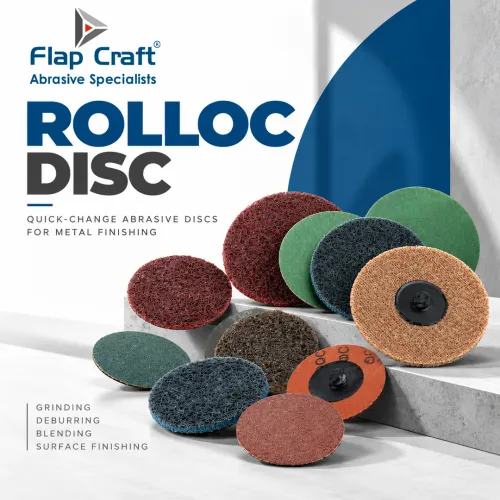
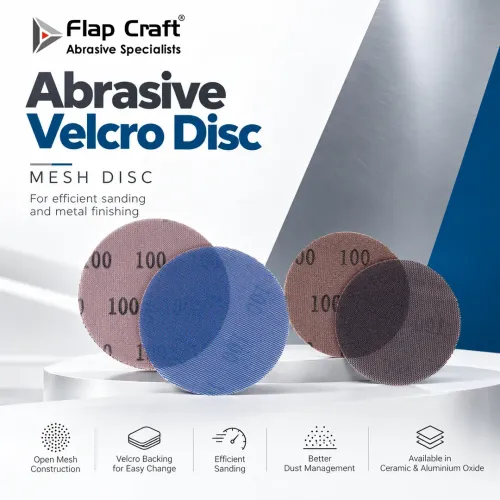
Our range includes flap wheels, mop wheels, profile flap wheels, non-woven discs, strip cut discs, and surface conditioning products.
From material removal and weld blending to deburring and final surface preparation, choosing the right abrasive for the application can help improve finishing quality and reduce unnecessary rework.
If you are unsure which abrasive or grit is suitable for your application, the best starting point is to understand the material, finishing requirement, and amount of material that needs to be removed.
Final Takeaway
Deburring, grinding, and polishing may all fall under metal finishing, but they solve different problems.
Deburring → Removes burrs and sharp edges
Grinding → Removes material and corrects surfaces
Polishing → Refines the surface and improves its appearance
Understanding this difference makes it easier to choose the right abrasive, use it at the right stage, and achieve a more consistent finish.
The goal is not simply to remove material. It is to use the right process and the right abrasive for the result you need.
Keywords