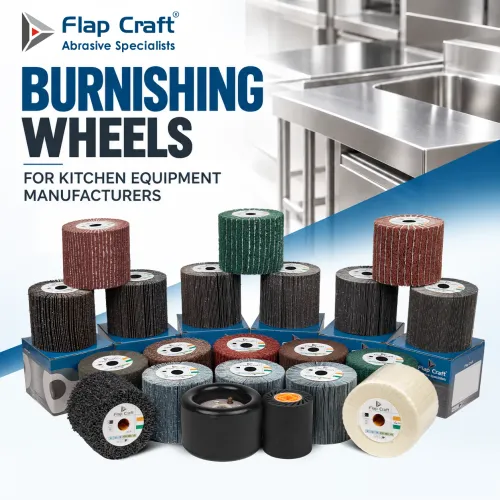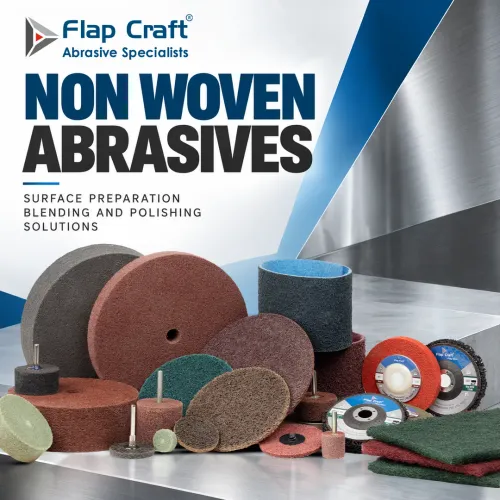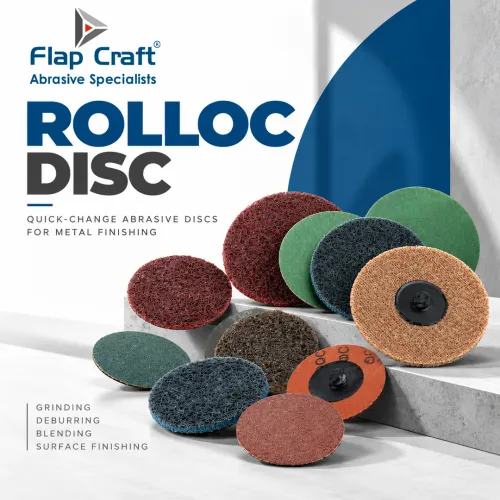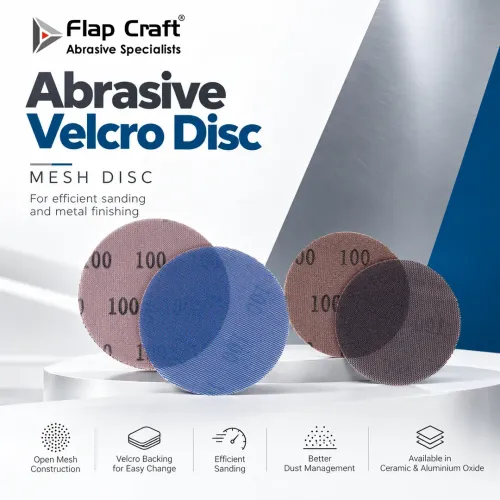
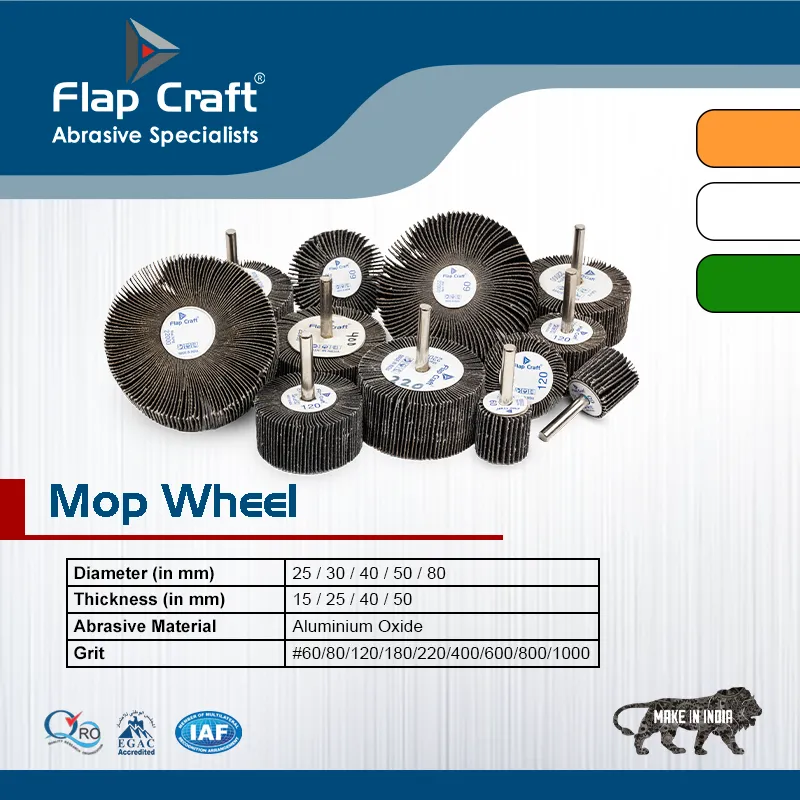
Mop Wheel: What Is It, What Is It Used For, and How to Choose the Right One?
When you need to finish a small metal component, reach a curved surface, or work on areas that are difficult to access with a standard abrasive disc, a mop wheel can be a practical choice.
It is commonly used for grinding, blending, deburring, and surface finishing, particularly where controlled abrasive action is needed.
But choosing a mop wheel is not simply about picking a size and grit. The material you are working on, the type of finish you need, and the machine you are using all matter.
So, what exactly is a mop wheel, where is it used, and which one should you choose?
What Is a Mop Wheel?
A mop wheel is an abrasive wheel made from multiple layers, or flaps, of abrasive material mounted around a central or shank.
This allows the wheel to be mounted directly onto a compatible power tool or machine. Once the wheel rotates, the abrasive flaps come into contact with the workpiece and gradually remove material from the surface.
The construction gives the wheel a degree of flexibility, allowing it to follow contours and work on areas where a rigid abrasive tool may be difficult to control.
Depending on the abrasive type and grit, mop wheels can be used for:
- Deburring metal components
- Removing light surface imperfections
- Blending welds
- Removing scratches
- Smoothing edges
- Finishing curved surfaces
- Preparing surfaces for further polishing
- General metal surface finishing
What Is a Mop Wheel Used For?
The main advantage of a mop wheel is its ability to combine controlled material removal with surface finishing. It is particularly useful when working on smaller components, profiles, edges, grooves, and areas where accessibility is important.
Deburring
Cutting, drilling, machining, and fabrication can leave sharp edges and unwanted burrs on metal components.
A suitable mop wheel can help remove these burrs while smoothing the surrounding area.
This is useful in general engineering, fabrication, automotive components, and other metalworking applications.
Weld Blending
Welded areas often need to be blended with the surrounding metal.
A mop wheel can help smooth and blend these areas, particularly when working on smaller components or sections where a larger abrasive wheel is difficult to use.
Scratch and Mark Removal
Metal surfaces can develop scratches and machining marks during manufacturing and handling.
Using the appropriate grit, a mop wheel can reduce these marks and prepare the surface for the next finishing stage.
Finishing Curved and Contoured Surfaces
This is one of the useful applications of a spindle-mounted abrasive.
Because the wheel can work around edges, curves, profiles, and smaller sections, it can be easier to control on irregularly shaped components.
Mop Wheel vs Flap Wheel
Both products use abrasive flaps, but their construction and intended applications can differ.
A conventional flap wheel is commonly used with an angle grinder or other suitable machine and is available in larger diameters for broader surface areas.
A mop wheel has an integrated or shank, allowing it to be mounted on compatible tools and machines.
This makes mop wheels particularly useful when working on:
- Smaller components
- Narrow surfaces
- Edges
- Grooves
- Curved profiles
- Hard-to-reach areas
How to Choose the Right Mop Wheel
Choosing the right mop wheel starts with understanding the job.
1. Consider the Material
The first thing to check is the material you are working on.
Stainless steel, mild steel, aluminium, and other metals can require different abrasive solutions.
The abrasive should be suitable for the material so that it can cut effectively without creating unnecessary surface damage.
2. Choose the Right Grit
Grit determines how aggressively the abrasive works and has a major effect on the final finish.
Coarser grits are generally used when more material needs to be removed or when the surface has heavy imperfections.
Finer grits are generally used for surface refinement and smoother finishing.
If you are removing a visible mark and then creating a finer finish, you may need to work through more than one grit rather than expecting a single abrasive to do everything.
3. Check the spindle and Machine Compatibility
This is especially important with spindle mop wheels.
Before using one, check that the or shank size is compatible with your machine or tool.
The wheel should also be suitable for the machine's operating speed.
Never select an abrasive solely by its diameter. The mounting system and operating specifications matter just as much.
4. Think About the Shape and Size of the Component
Look at the area you need to finish.
If you are working on a flat, open surface, a larger abrasive may be more convenient.
For smaller components, edges, curves, grooves, and profiles, a mop wheel can provide better access and control.
5. Decide the Finish You Need
The final surface finish should influence your abrasive choice from the beginning.
A component that will be painted may require a different preparation process from one that will receive a brushed or satin stainless steel finish.
Think about the final appearance before selecting the grit.
Which Mop Wheel Is Best for Stainless Steel?
Stainless steel is widely used in fabrication, kitchen equipment, architectural work, and industrial components.
Because the finished appearance is often important, abrasive selection needs some care.
For stainless steel, the right mop wheel depends on the condition of the surface and the finish you want.
If you need to remove heavier marks or blend a weld, you may need a more aggressive grit.
If the surface has already been prepared and you are looking to refine the finish, a finer grit may be more appropriate.
The important thing is to avoid using more aggressive abrasives than necessary. Excessive pressure or the wrong grit can create deeper scratches and make the finishing process longer rather than shorter.
Where Are Mop Wheels Used?
Mop wheels can be useful across a range of metalworking applications, including:
- Stainless steel fabrication
- Kitchen equipment manufacturing
- General engineering
- Automotive component manufacturing
- Sheet metal work
- Metal furniture manufacturing
- Architectural metalwork
- Small component finishing
- Weld blending and deburring
The exact application depends on the abrasive construction, grit, size, specification, and machine being used.
Mop Wheels at Flap Craft
At Flap Craft, we supply abrasive solutions for different metal-working and surface finishing requirements.
Our range extends beyond mop wheels and includes flap wheels, mop wheels, profile flap wheels, non-woven discs, strip cut discs, surface conditioning products and many more.
Whether the requirement is deburring a component, blending a weld, removing surface marks, or achieving a consistent finish, the right abrasive depends on the application.
If you know the material, machine, required finish, and the type of work you need to perform, selecting the right abrasive becomes much easier.
The right abrasive is not always the most aggressive one. It is the one that matches the job.
Keywords