Burnishing Machine for Stainless Steel: Complete Guide
Stainless steel is widely used in fabrication, architecture, kitchens, elevators, furniture and industrial equipment because of its strength, durability and clean appearance. But achieving a smooth, uniform and professional surface finish often requires the right finishing equipment.
A burnishing machine for stainless steel is designed to make this process faster, more consistent and easier than manual polishing. Modern portable burnishing machines can be used for surface cleaning, scratch removal, weld-seam finishing and creating linear, satin, brushed and hairline finishes.
What Is a Burnishing Machine?
A burnishing machine is a power tool used for metal surface finishing. Depending on the machine and abrasive wheel used, it can remove surface imperfections and create a controlled decorative finish.
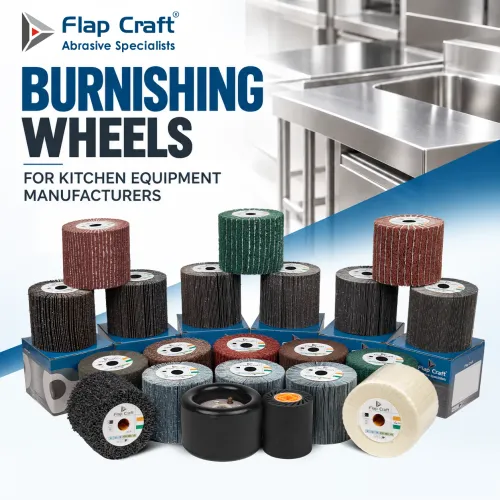
Unlike conventional grinding, where the main purpose is material removal, finishing with an abrasive burnishing wheel focuses on refining and conditioning the surface to achieve the required appearance.
For stainless steel fabrication, portable burnishing machines are particularly useful because they can work on flat surfaces, pipes, welded areas and other fabricated components.
How Does a Burnishing Machine Work on Stainless Steel?
The machine rotates an abrasive wheel at a controlled speed while the operator moves it along the stainless-steel surface.
The result depends mainly on:
- Abrasive wheel type
- Grit or grade
- Machine speed
- Pressure applied
- Movement direction
- Condition of the stainless-steel surface
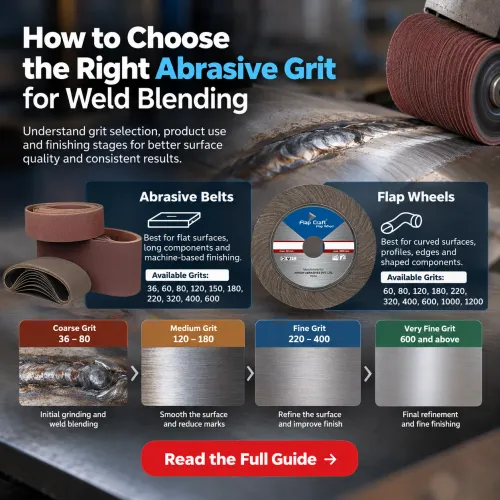
Lower grits generally provide more aggressive surface conditioning, while finer abrasives are used to achieve a smoother and more refined finish.
For a consistent brushed or hairline appearance, maintaining a steady movement and consistent pressure is important.
What Finishes Can You Achieve?
A good stainless-steel burnishing machine can be used for several surface-finishing applications.
- Satin Finish: Creates a smooth, low-gloss appearance with a soft texture.
- Brushed Finish: Produces visible directional lines across the stainless-steel surface.
- Hairline Finish: Creates long, fine and continuous lines. Hairline finishing is commonly used for architectural panels, elevators and premium metal interiors.
- Matt Finish: Reduces surface shine and gives stainless steel a more uniform, understated appearance.
The exact finish depends on the abrasive, grit, speed, pressure and finishing technique.
Burnishing Machine for Weld Seam Finishing
One of the most useful applications is stainless-steel weld finishing.
After welding, stainless steel can have visible weld marks, discolouration, and uneven areas. A burnishing machine can help clean and blend these areas into the surrounding surface, creating a more uniform appearance. Portable burnishing machines are specifically marketed for welded-seam removal and surface preparation.
This makes them useful for stainless-steel fabrication, railings, kitchen equipment, architectural metalwork and other fabricated products.
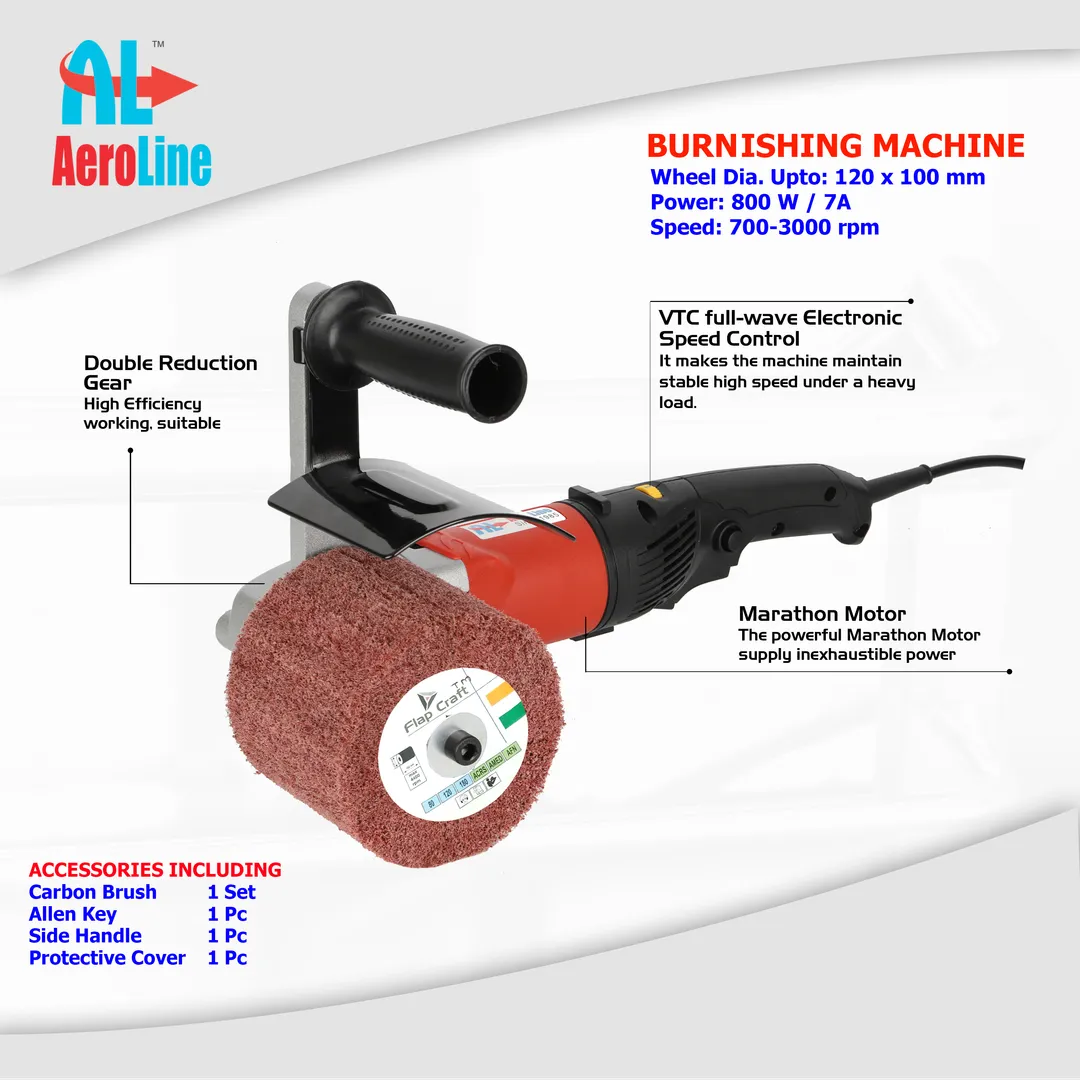
AeroLine Burnishing Machine for Stainless Steel
The AeroLine Burnishing Machine is designed for professional metal surface finishing. It features an 800 W motor and a variable speed of 700–3000 RPM, allowing the operator to adjust the working speed according to the application.
It supports burnishing wheels up to approximately 120 × 100 mm, making it suitable for a range of stainless-steel surface-finishing jobs.
Variable speed is particularly useful because different abrasives and finishing requirements may need different operating speeds.
Where Is a Stainless-Steel Burnishing Machine Used?
Common applications include:
- Stainless-steel fabrication
- Elevator panels and interiors
- Kitchen equipment
- Stainless-steel railings
- Architectural metalwork
- Doors and frames
- Furniture and fixtures
- Decorative stainless-steel panels
- Weld seam finishing
- Surface scratch removal
- Satin and hairline finishing
Stainless-steel finishing equipment is widely used for architectural panels, elevators, appliances, kitchen equipment and other decorative metal applications.
How to Choose the Right Burnishing Machine
Before buying a burnishing machine for stainless steel, consider:
- Power: Higher motor power can be useful for demanding applications.
- Variable speed: Allows better control over different abrasives and finishing requirements.
- Wheel size: Choose a machine compatible with the abrasive wheels you regularly use.
- Ergonomics: For fabrication work, a comfortable and manageable machine can reduce operator fatigue.
- Abrasive compatibility: Make sure suitable wheels and abrasives are available for the finish you want.
- Application: A machine for weld finishing may have different requirements from one primarily used for decorative hairline finishing.
Frequently Asked Questions
Q- What is a burnishing machine used for?
Ans - It is used for metal surface finishing, including scratch removal, weld-seam finishing, brushing, satin finishing, hairline finishing and surface conditioning.
Q- Can a burnishing machine be used on stainless steel?
Ans - Yes. Stainless steel is one of the common materials processed using portable burnishing and surface-finishing machines.
Q- Can it remove stainless-steel weld marks?
Ans - Yes. With the appropriate abrasive wheel and technique, a burnishing machine can help remove and blend weld seams and surrounding surface marks.
Q- Can a burnishing machine create a hairline finish?
Ans - Yes. With the appropriate abrasive and controlled movement, burnishing machines can produce linear and hairline finishes.
Q- What RPM is suitable for stainless steel?
Ans - There is no single RPM for every application. The appropriate speed depends on the abrasive, wheel size, material and desired finish. A variable-speed machine gives the operator greater control.
Q- What abrasive wheel should I use for stainless steel?
Ans - The choice depends on the existing surface and required finish. Coarser abrasives are generally used for more aggressive conditioning, while finer abrasives are used for smoother finishing.
Q- Is a burnishing machine better than manual polishing?
Ans - For repeated fabrication work, a power burnishing machine can provide greater speed, consistency and productivity than manual finishing.
Q- Is a burnishing machine the same as a polishing machine?
Ans - Not exactly. The terms are sometimes used interchangeably in the metal-finishing industry, but the machine, abrasive and finishing process determine the actual result. For stainless steel, the same portable machine may be configured for several finishing applications.
Keywords